
How to Build Robots That Actually Learn from the Past
Your robot just missed the target. It saw the object move, but it couldn't connect the dots. It had no sense of what happened two seconds ago. You're left with broken parts, wasted time, and a system that can't handle real-world change.
The problem is simple. Robots need to understand time to be useful. They need to see an object moving and predict where it will be. But processing all that video history can slow them down. You face a trade-off: a smart, slow robot or a fast, dumb one.
What Researchers Discovered
The research team built a system called Long-WAM. They proved a critical point. Giving a robot a longer memory does make it perform better. But only if the robot's core AI brain was trained for prediction from the start.
You can think of it like training a soccer goalie. You could show a goalie every game ever played. That's a long memory. But it's useless unless the goalie was specifically trained to watch the ball's trajectory and predict where it will go next. The prediction skill makes the memory valuable.
This is exactly what the researchers did. They used an AI pre-trained to watch video and guess the next few frames. Then, they connected that predictive brain to a robot's controls. The result was a robot that could "imagine" what would happen next before it acted. This led to smoother, more reliable movements.
You can read the full paper here: Long-WAM: Scaling the Context of World-Action Models.
The technical optimizations are just as important. The team used methods like streaming video processing and hardware-specific code. This let the robot use its powerful predictive memory without lag. It ran in real time, even on the computer onboard a robot. This makes it practical, not just a lab experiment.
Finally, they showed this reliable "execution" layer makes high-level planning AI (like LLMs) much more effective. A brilliant plan is worthless if the robot can't do the task. This system acts as the highly competent floor team that makes the CEO's strategy a reality.
How to Apply This Today
You don't need to rebuild everything from scratch. You can apply these principles to your own robotics projects now.
Here are five concrete steps to get started this week.
Step 1: Audit Your AI's Pre-Training Check the foundation model you're using for robot vision. Is it pre-trained for a task like image classification? Or is it pre-trained for video prediction? This is the most critical lever. If it's not a predictive model, performance gains from more memory will be minimal. Look for models described as "autoregressive video predictors" or "world models."
For example: Instead of fine-tuning a general vision model like CLIP, start with a model specifically trained to predict the next frame in a video sequence. This is your new baseline.
Step 2: Implement an "Imagine-Then-Act" Loop Structure your robot's decision cycle in two clear phases. First, use your predictive model to generate a short, imagined video of what will happen in the next half-second. Second, based on that prediction, choose the best action to take.
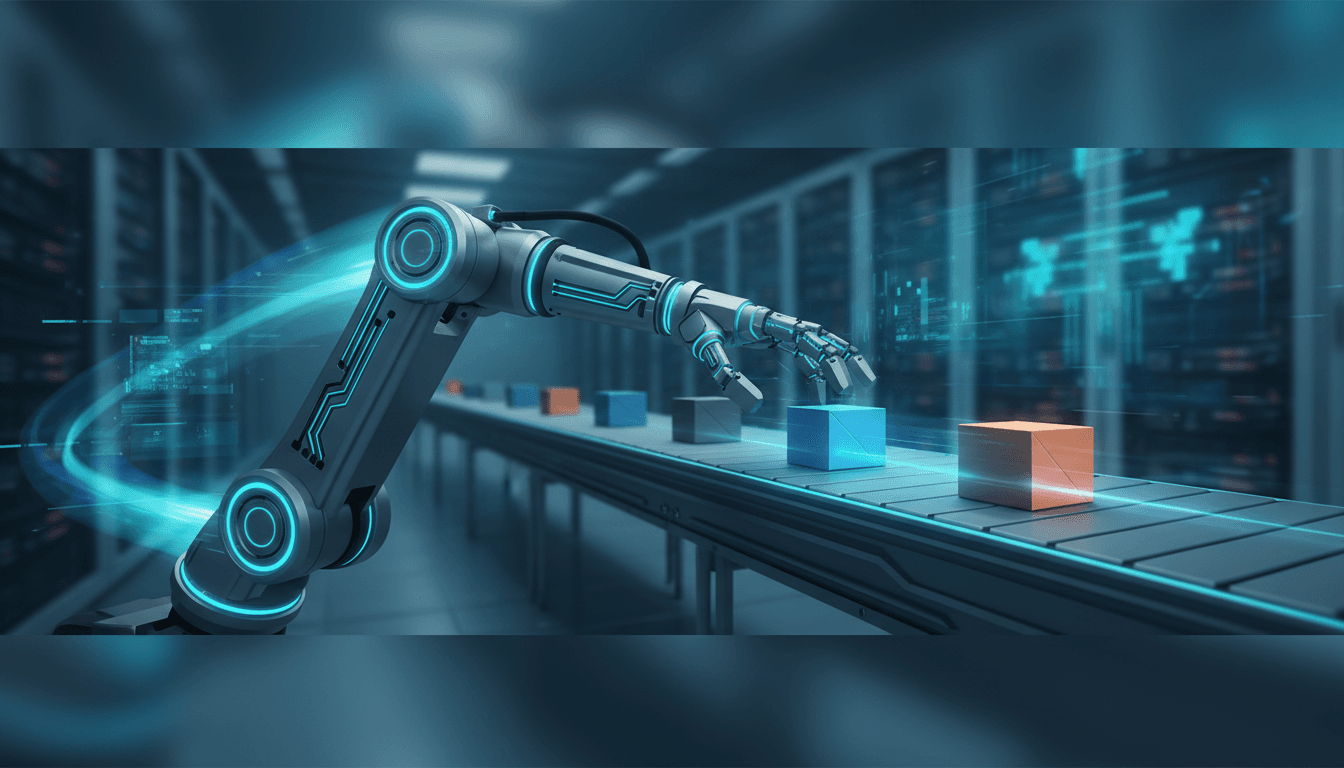
For example: A robot arm reaching for a moving box on a conveyor. Cycle: 1) Predict the box's location in 0.5 seconds. 2) Command the arm to move to that predicted location. This is smoother than just reacting to the box's current position.
Step 3: Optimize for Real-Time Speed Longer memory means more data to process. You must optimize to avoid slowdowns. Implement two key techniques:
- Streaming Processing: Don't re-process the entire video history for every new frame. Only process the new frame and update a condensed representation of the past.
- Hardware-Specific Code: Use libraries like TensorRT (for NVIDIA) or OpenVINO (for Intel) to compile your model for your specific deployment hardware. This can double or triple inference speed.
Step 4: Start with a 5-Second Memory Window Don't try to process minutes of history. The research shows major gains happen with just a few seconds of context. Start by feeding your model the last 5 seconds of video observations (e.g., 150 frames at 30 fps). Measure the success rate of a dynamic task. Then gradually increase the window to 10 or 20 seconds and see if performance improves further. You'll likely find a plateau.
Step 5: Layer High-Level Planners on Top Once your low-level execution is reliable, integrate a high-level planner. Use a large language model (LLM) or a task planner to generate goal-oriented instructions (e.g., "stack the red block on the blue block"). Your predictive execution layer then translates those instructions into smooth, reliable motions. This separation of concerns is more robust than an end-to-end model trying to do both planning and high-speed control.
What to Watch Out For
This approach is powerful, but it has limits. Be aware of these three risks.
- The Data Wall: The predictive AI needs massive amounts of video data for pre-training. This often includes both human and robot video. If you're in a niche domain with little available video data, you may struggle to train or fine-tune an effective model.
- Diminishing Returns: Adding more memory helps, but only up to a point. The performance gains plateau after a certain history length (often around 10-20 seconds). Don't waste engineering effort trying to give your robot a perfect, infinite memory. It's not necessary.
- It Can't Learn New Things: This system excels at executing tasks within the distribution of its training data. It does not actively learn completely novel tasks on the fly. If your use case requires the robot to constantly adapt to unseen scenarios without new data, this is not a complete solution.
Your Next Move
This week, run a simple diagnostic. Take a dynamic task your robot struggles with—like picking a moving item. Record a short video of the scene. Now, ask your team: "Is our vision model trained to predict what happens next in this video?"
If the answer is no, you've found your biggest opportunity. Start by exploring pre-trained video prediction models. This single change in foundation can make your robot's memory—and its actions—far more intelligent.
What's the one task where a robot with better anticipation would save you the most time or money?
Comments
Loading...